
Between a stored cell and a medicine lies a distance made of processes, controls and data. Advanced cell therapies only cover that distance when the product is reproducible, traceable and verified in a clinical study with pre-declared endpoints. A multicentre trial published in 2026 on umbilical cord mesenchymal cells, and the regulatory decision that followed it, make it possible to trace that journey step by step.
Why a stored cell is not yet a therapy
A cryopreserved biological sample is, to all intents and purposes, a raw material. It has potential value, not a therapeutic indication.
For that raw material to become a medicine, it needs characteristics that have nothing to do with the biology of the cell itself: a defined identity, a measurable degree of purity, documented potency, an established dose, guaranteed sterility and — above all — batch-to-batch reproducibility. A product that works only once is not a product.
This is the difference between storing and manufacturing. Storing means keeping a biological tissue intact over time. Manufacturing means turning it into something a regulatory authority can assess, authorise and monitor.
The three requirements of advanced cell therapies
The path that takes a perinatal cell from the laboratory to the bedside rests on three pillars, all of which can be verified externally.
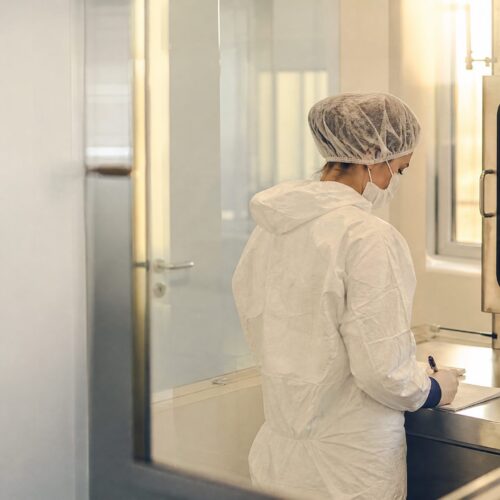
- A GMP-certified process. Good Manufacturing Practices are the same rules that govern the pharmaceutical industry: cleanrooms with controlled classification, validated procedures, documented controls on every single batch. Without GMP, the material remains confined to experimental use.
- An accredited chain of traceability. From collection to administration, every step must be reconstructable. For the umbilical cord, the dedicated international standard is FACT-NetCord, which verifies process, staff and quality system through periodic audits.
- Prospective clinical evidence. Studies with a declared population, endpoints defined before enrolment and a safety profile recorded systematically. Retrospective case series are not enough.
When all three elements are in place, the cell product stops being a promise and becomes a dossier that can be assessed.
Case study: cord cells in gastrointestinal GVHD
A recent example makes the step concrete. Graft-versus-Host Disease (GVHD) is the complication that follows haematopoietic stem cell transplantation in 30 to 60% of patients: the donor’s immune cells attack the recipient’s tissues. In the acute form with gastrointestinal involvement that does not respond to corticosteroids, therapeutic alternatives are few.
A multicentre trial tested a product made from umbilical cord tissue mesenchymal stem cells (hUC-MSC, named PLEB001) as an add-on to the anti-CD25 antibody therapy already in use, not as a replacement. In 54 patients:
- clinical response at day 28 in 63% of cases, with over 55% in complete remission;
- one-year survival of 65.8%;
- no infusion-related toxicity and no serious adverse events directly attributable to the cells.
The most interesting detail from a methodological standpoint is not the percentage but the positioning: advanced cell therapies enter clinical practice alongside established protocols, at a stage where the standard of care has already failed.
What “conditional approval” really means
Approval came in January 2025 from the Chinese regulatory authority (NMPA), in conditional form and limited to patients over 14 years of age. It is the first mesenchymal cell product to obtain this status in the country.
The wording needs a precise reading. Conditional is not the same as full approval: it carries an obligation to generate further evidence after marketing authorisation and can be withdrawn if those data do not materialise. It also applies only in the jurisdiction that granted it, and has no effect in Switzerland or the European Union.
What the decision does demonstrate is a different point: a viable regulatory pathway exists, and a cell product can reach the end of it if its quality dossier holds up.
Limitations declared by the authors
The authors do not present the result as definitive, and it is right to say so. The study involved 54 patients, concentrated in a single geographical area. The optimal dosage, the duration of the effect and the place of cord MSCs in the GVHD treatment algorithm remain to be defined: large-scale studies are needed. Active trials in this line of research can be consulted on ClinicalTrials.gov.
Important note — The applications described belong to clinical research and to regulatory processes in specific jurisdictions, and do not constitute approved therapies available in current practice in Switzerland. None of the information provided should be taken as medical advice. For any clinical assessment, please consult your doctor.
Why SSCB follows advanced cell therapies
This study confirms what guides a biobank’s daily work: process quality matters as much as the cell source. A sample stored without verifiable standards can never enter a regulated clinical pathway, however valuable the starting tissue may be.
SSCB’s cleanrooms and procedures are GMP certified, and SSCB products are considered medicinal products distributable internationally. Added to this is FACT-NetCord accreditation. We have dedicated an in-depth page to certifications and accreditations, while the differences between perinatal sources are explained on our page on umbilical cord stem cells.
From birth to cryopreservation, every SSCB sample follows a documented and controlled pathway. Discover how preservation works, step by step.
Source — Mesenchymal stromal cells as add-on therapy to anti-CD25 antibodies for treating gastrointestinal-involved steroid-refractory acute graft-versus-host disease. Stem Cell Research & Therapy, March 2026.