
The preservation of stem cells, from cord blood, cord tissue, placenta, adipose tissue, or peripheral blood mononuclear cells, is a complex process that requires the highest international standards of quality and safety.
At SSCB – Swiss Stem Cells Biotech, the only 100% Swiss private biobank, we manage entirely in our laboratories in Switzerland all phases – from processing to cryopreservation – without outsourcing and without international transport of samples to third parties.
Our certifications cover all types of samples that we preserve:
In this way, we guarantee all our clients the same level of quality, safety, and traceability, regardless of the type of biological sample managed.
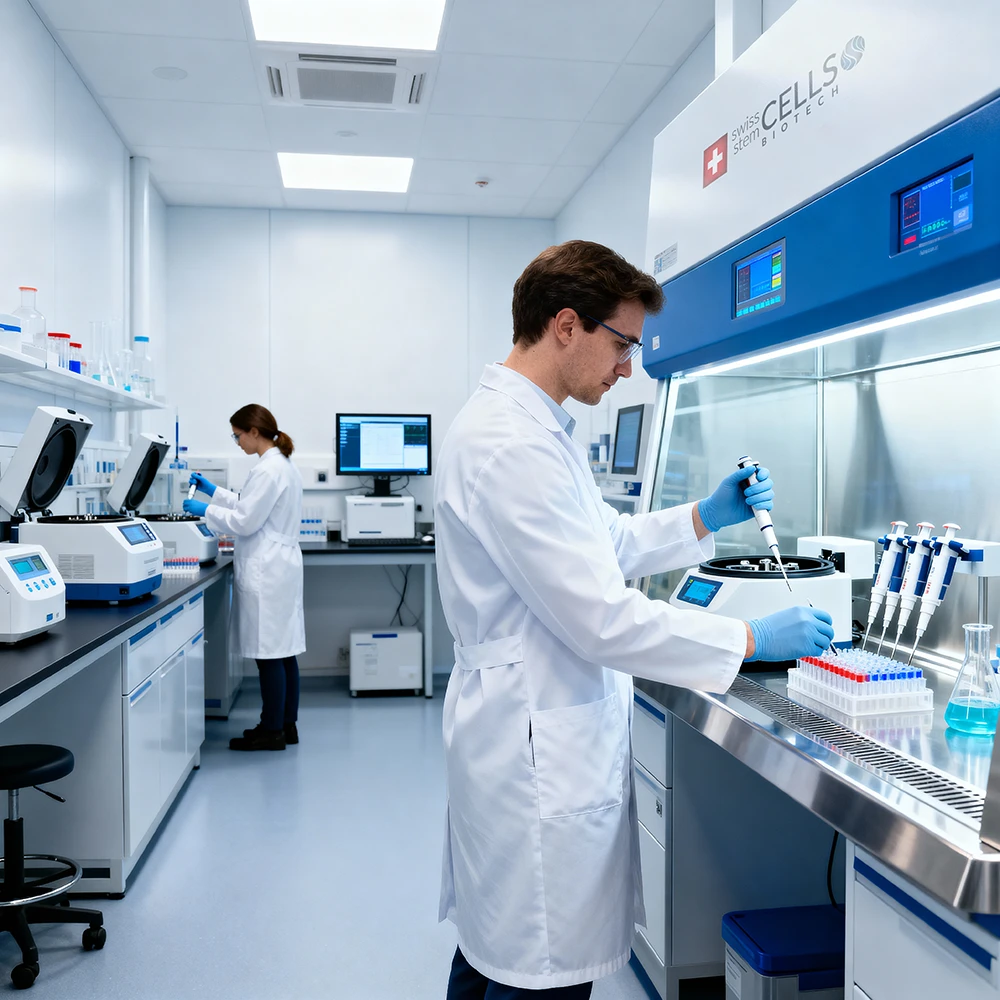
The processing is the most delicate phase of the stem cell preservation process: here the sample is processed, the cells are extracted (when necessary), and prepared for cryopreservation. Processing is an active and decisive phase, on which the future quality of the cells depends.
The cryopreservation, on the other hand, is the phase of long-term maintenance of the cells in special biocontainers: it can only be effective if the processing has been carried out correctly.
Quality certifications play a fundamental role both in processing and in the final cryopreservation.
Swissmedic is the Swiss agency for therapeutic products, the national authority that regulates and controls all medicines, advanced therapies, and cellular products.
It is the body that sets the most rigorous standards to ensure safety, efficacy, and quality in the Swiss healthcare sector and is internationally recognized.
SSCB operates based on Swissmedic authorizations applicable to the activities of treatment and management of human cells and tissues – stem cells from cord blood, cord tissue, placenta, adipose tissue and peripheral blood – and authorizes:
This authorization is granted only after official inspections, in which Swissmedic thoroughly analyzes environments, procedures, personnel, tools, and quality systems. It is therefore not just a simple declaration, but an official recognition that confirms SSCB operates with the same standards as public facilities and pharmaceutical companies.
Swissmedic is the Swiss agency for therapeutic products, the national authority that regulates and controls all medicines, advanced therapies, and cellular products.
It is the body that sets the most rigorous standards to ensure safety, efficacy, and quality in the Swiss healthcare sector and is internationally recognized.
SSCB operates based on Swissmedic authorizations applicable to the activities of treatment and management of human cells and tissues – stem cells from cord blood, cord tissue, placenta, adipose tissue and peripheral blood – and authorizes:
This authorization is granted only after official inspections, in which Swissmedic thoroughly analyzes environments, procedures, personnel, tools, and quality systems. It is therefore not just a simple declaration, but an official recognition that confirms SSCB operates with the same standards as public facilities and pharmaceutical companies.


The Good Manufacturing Practice (GMP) are the Good Manufacturing Practices, the same standards adopted internationally by the pharmaceutical industry to ensure the quality, safety, and efficacy of medicines.
In SSCB, these standards strictly regulate the processing of cord blood, cord tissue, placenta, adipose tissue, and peripheral blood.
Applying GMP means that each sample is treated according to quality standards similar to those used in the pharmaceutical industry, following traceable, reproducible procedures subjected to constant and scrupulous controls.
Specifically, GMP ensures that the samples are:
The Good Manufacturing Practice (GMP) are the Good Manufacturing Practices, the same standards adopted internationally by the pharmaceutical industry to ensure the quality, safety, and efficacy of medicines.
In SSCB, these standards strictly regulate the processing of cord blood, cord tissue, placenta, adipose tissue, and peripheral blood.
Applying GMP means that each sample is treated according to quality standards similar to those used in the pharmaceutical industry, following traceable, reproducible procedures subjected to constant and scrupulous controls.
Specifically, GMP ensures that the samples are:
The Good Distribution Practice (GDP) are the internationally recognized Good Distribution Standards used in the pharmaceutical sector to ensure that medicines maintain their quality throughout the entire logistics chain.
At SSCB, these rules apply to the management, storage, and handling of all samples – cord blood, cord tissue, placenta, adipose tissue, and peripheral blood – ensuring that the cells remain protected and unchanged in every circumstance.
Thanks to the GDP, SSCB ensures that the samples are:
The GDP do not only regulate transportation: they represent a true quality protection network, extending from the laboratory to any potential transfer, in Switzerland or abroad.
For our clients, this translates into a concrete guarantee: regardless of where the sample will need to be sent or used in the future, its biological characteristics will be preserved with the same attention and safety that applies to the distribution of medicines.

The FACT–NetCord accreditation represents the highest international standard and the most recognized worldwide for the preservation of stem cells from cord blood.
It is not a generic certification, but a specific accreditation for umbilical cord blood, specifically developed to ensure that every phase—from collection to processing, through cryopreservation and distribution—complies with the most stringent requirements of transplant medicine.
This accreditation certifies that SSCB:
Obtaining and maintaining the FACT–NetCord accreditation is an exceptional achievement: very few biobanks worldwide can boast it, and SSCB is the only private biobank in Switzerland to have achieved and maintained it continuously since 2012. Globally, fewer than ten private biobanks hold this prestigious accreditation.
This means that our clients are assured that the samples stored at SSCB are not only protected according to the highest quality standards but are also recognized according to international standards used by many hospitals and transplant centers.
The FACT–NetCord accreditation represents the highest international standard and the most recognized worldwide for the preservation of stem cells from cord blood.
It is not a generic certification, but a specific accreditation for umbilical cord blood, specifically developed to ensure that every phase—from collection to processing, through cryopreservation and distribution—complies with the most stringent requirements of transplant medicine.
This accreditation certifies that SSCB:
Obtaining and maintaining the FACT–NetCord accreditation is an exceptional achievement: very few biobanks worldwide can boast it, and SSCB is the only private biobank in Switzerland to have achieved and maintained it continuously since 2012. Globally, fewer than ten private biobanks hold this prestigious accreditation.
This means that our clients are assured that the samples stored at SSCB are not only protected according to the highest quality standards but are also recognized according to international standards used by many hospitals and transplant centers.
The ISBT 128 standard is the international system for unique identification and traceability of biological samples, adopted by biobanks, hospitals, and transplant centers worldwide.
In SSCB, ISBT 128 applies to all stored samples – cord blood, cord tissue, placenta, adipose tissue, and peripheral blood – ensuring that each sample receives a unique and universal code, recognized everywhere.
Thanks to ISBT 128:
This means that the samples are not only stored securely but are also ready to be used in an international clinical context, without the need for further adaptations or conversions.
For our clients, ISBT 128 represents a fundamental guarantee: the sample deposited today will always be identifiable, safe, and universally usable, wherever it is needed.
The ISBT 128 standard is the international system for unique identification and traceability of biological samples, adopted by biobanks, hospitals, and transplant centers worldwide.
In SSCB, ISBT 128 applies to all stored samples – cord blood, cord tissue, placenta, adipose tissue, and peripheral blood – ensuring that each sample receives a unique and universal code, recognized everywhere.
Thanks to ISBT 128:
This means that the samples are not only stored securely but are also ready to be used in an international clinical context, without the need for further adaptations or conversions.
For our clients, ISBT 128 represents a fundamental guarantee: the sample deposited today will always be identifiable, safe, and universally usable, wherever it is needed.
The Federal Office of Public Health (FOPH) – Swiss Federal Office of Public Health – is the entity that oversees public health and establishes the rules for the proper management of human cells for clinical purposes.
The FOPH authorization confirms that SSCB is fully compliant with Swiss legislation and is officially authorized to:
Swiss Stem Cells Biotech SA holds authorizations issued by the Federal Office of Public Health (FOPH) for specific activities related to umbilical cord blood, including importation, exportation, and storage, in compliance with current Swiss regulations.
The Federal Office of Public Health (FOPH) – Swiss Federal Office of Public Health – is the entity that oversees public health and establishes the rules for the proper management of human cells for clinical purposes.
The FOPH authorization confirms that SSCB is fully compliant with Swiss legislation and is officially authorized to:
Swiss Stem Cells Biotech SA holds authorizations issued by the Federal Office of Public Health (FOPH) for specific activities related to umbilical cord blood, including importation, exportation, and storage, in compliance with current Swiss regulations.
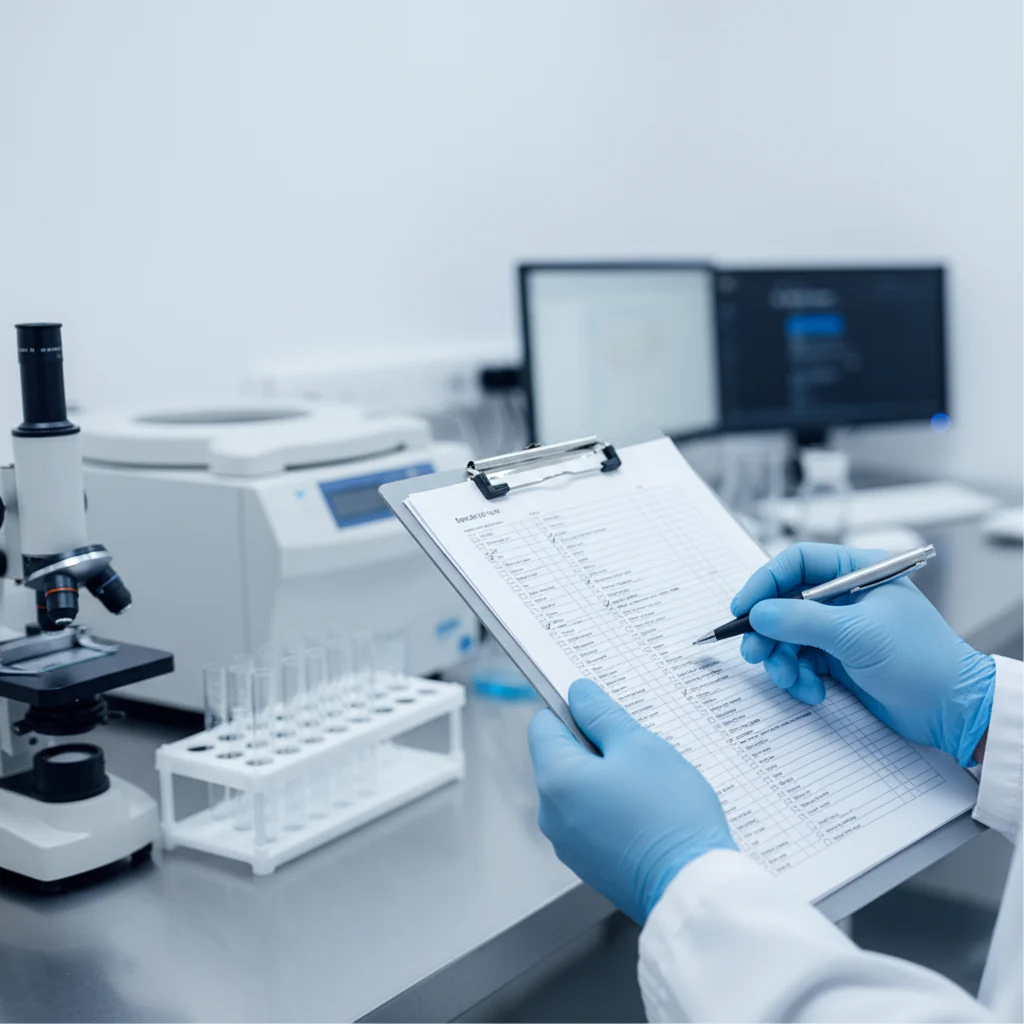
All our certifications and authorizations are subject to periodic inspections by external bodies (Swissmedic, FACT, FOPH, ICCBBA).
During these audits, SSCB is analyzed in every detail:
Only by passing these checks can SSCB renew its certifications. This system of verifications represents the strongest guarantee for our clients: Swiss Stem Cells Biotech SA operates according to quality systems and operational procedures aimed at ensuring high standards of safety and traceability in the collection, processing, and storage of biological samples.
The competent authorities may conduct inspections to verify compliance with applicable regulatory requirements. The responsibility for the operational management and quality of the stored samples remains with Swiss Stem Cells Biotech SA.
A Swiss biotechnology company specializing in the preservation of human cells and tissues.