
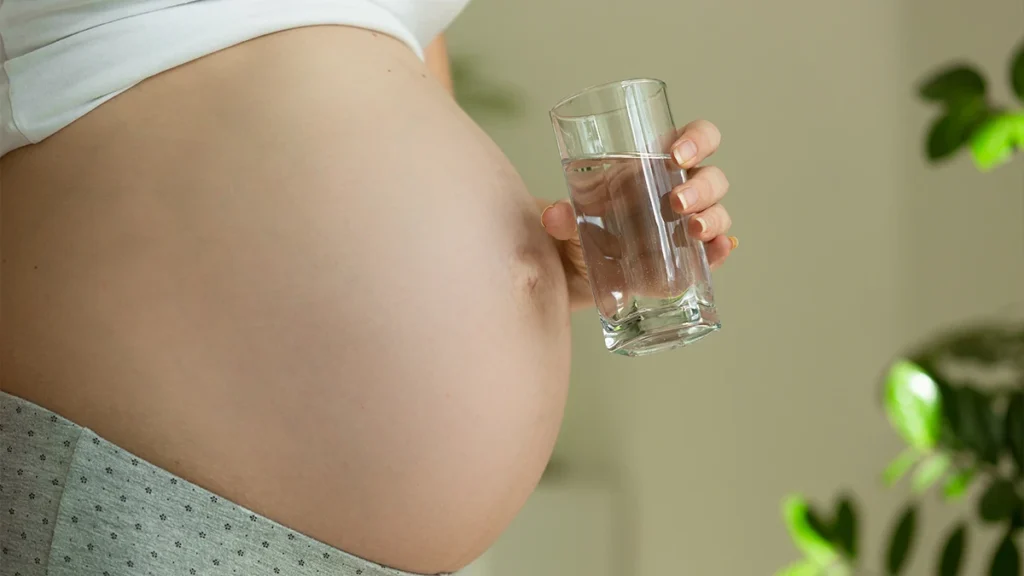
When thinking about pregnancy, the mind immediately races to tender and symbolic images: the growing belly, the first ultrasounds, the little kicks that bring smiles. More rarely do we think of water. Yet, if there is one element that silently accompanies every phase of this adventure, it is indeed water. Invisible, taken for granted, always available… yet essential. Drinking during pregnancy does not just mean quenching thirst. It literally means nourishing the life growing inside you. Water becomes an invisible bridge connecting your body to that of the baby, a resource that supports every cell, every tissue, every vital function. Many women do not realize it right away, but hydration is one of the simplest and most effective gestures to take care of pregnancy. There are no complicated formulas or strict diets: just keep a bottle nearby and make it a habit, day after day, to remember that that extra sip is not just for you, but also for the little one growing inside you. The changing body and increasing thirst During pregnancy, the female body becomes an extraordinary machine, capable of transforming in just a few months to welcome and nourish another life. But this machine works tirelessly and needs more fuel, more energy, more oxygen… and especially more water. Think about this: the volume of maternal blood increases by 40-50%. This means that every cell receives more oxygen and more nutrients, but it also means that the circulatory system needs more fluid to function well. Then there is the amniotic fluid, that protective ocean in which your baby floats and grows: it also depends on your hydration. And again: the kidneys work double time because they have to filter both the waste from your body and that produced by the little one. The intestines, pushed by progesterone, become lazier and risk slowing down: water becomes the natural lubricant that helps them function better. Even the skin, which stretches day by day, needs hydration from the inside to remain elastic. It is no coincidence, then, that during pregnancy, thirst is felt more often. It is the body sending clear signals, and ignoring them is not a good idea. A little dehydration can already manifest as headaches, fatigue, dizziness, concentrated urine. Drinking regularly becomes a sort of “daily maintenance,” simple yet incredibly powerful. But how much water do you really need? This is the question that almost all expectant mothers ask themselves. The simplest answer is: at least two liters a day. But, as always, biology does not fit neatly into numbers. There are days when you need more, for example in summer, when it’s hot and you sweat more, or if you engage in some physical activity. Other days you might feel less thirsty, yet the body continues to demand its supply. A very practical trick to understand if you are drinking enough is to observe the color of your urine: it should be light, almost clear. If it becomes dark yellow, it means that fluids are insufficient. It’s a simple, reliable method that is always at hand. Drinking: not just water from a glass When we talk about hydration, we immediately think of the classic half-liter bottle. But in reality, water reaches the body in different ways. Fruits and vegetables, for example, are rich in water. A watermelon, a juicy peach, a plate of cucumbers, or a simple mixed salad can significantly contribute to the daily balance. Even soups, light broths, and unsweetened herbal teas are excellent allies. This does not mean they can replace pure water, which remains the best and most immediate source. But realizing that hydration also happens “at the table” helps to experience it more naturally, without the feeling of having to constantly count glasses. The risks of dehydration Many women underestimate how easy it is to become dehydrated. You don’t need to run a marathon in the sun: just a couple of hours without drinking, perhaps on a hot day, can start to make you feel exhausted. Dehydration during pregnancy can have more troublesome consequences than at other times: it can increase nausea and vomiting, promote urinary infections, and worsen constipation. In more serious cases, if prolonged, it can even increase the risk of premature contractions. That’s why you should never wait until you are thirsty to drink: thirst is already a warning sign, not a preventive signal. Small daily tricks to remember to drink Many expectant mothers report that, despite their good intentions, they often end up forgetting to drink enough. It seems absurd, but it happens to many. However, there are simple strategies to make hydration an automatic gesture:
- always have a bottle within reach, in your bag, on your desk, on your nightstand;
- drink a glass of water as soon as you wake up and another before going to sleep;
- associate water with small rituals (a sip every time you change activities, for example when switching from the computer to the phone, or every time you put the kettle on);
- make water more inviting with a slice of lemon, a few mint leaves, or fresh fruit.
Over time, drinking becomes a natural habit, no longer a task to remember. Hydration and minor pregnancy discomforts Drinking the right amount of water is not just a general recommendation: it can really make a difference for many of the most common discomforts during the nine months.
- Nausea: small frequent sips help keep the stomach more stable.
- Muscle cramps: they are often linked to imbalances in fluids and electrolytes. Water, along with a balanced diet, reduces the frequency of cramps.
- Swelling in feet and ankles: it seems paradoxical, but drinking more helps reduce retention by stimulating diuresis.
- Constipation and hemorrhoids: water softens stools and makes the intestines more regular.
- Skin and stretch marks: good internal hydration supports skin elasticity, which stretches to accommodate the belly.
A gesture of love for yourself and your baby Drinking water during pregnancy is not just a physiological gesture: it is an act of love. Every glass you drink helps create the ideal environment for your baby’s growth. It’s a simple way to say: “I take care of us”. Many women, especially in the early months, feel overwhelmed by the amount of rules and recommendations. But hydration is one of the few things that does not require complicated calculations or sacrifices: just remember to carry water with you and listen to your body’s signals. It’s not a detail, it’s not an accessory advice: it’s a true wellness strategy that can accompany you not only during pregnancy but also in breastfeeding and beyond. Conclusion Among the many attentions that pregnancy requires, hydration is perhaps the simplest to implement and, at the same time, one of the most effective. No great efforts are needed, just the awareness that water is much more than a beverage: it is life, energy, protection. Drinking enough every day means gifting yourself vitality and serenity, while at the same time building the best possible start for your baby. Note: The contents of this page are for informational purposes and do not replace professional advice. In case of symptoms, doubts, or medical needs, always consult a qualified doctor.